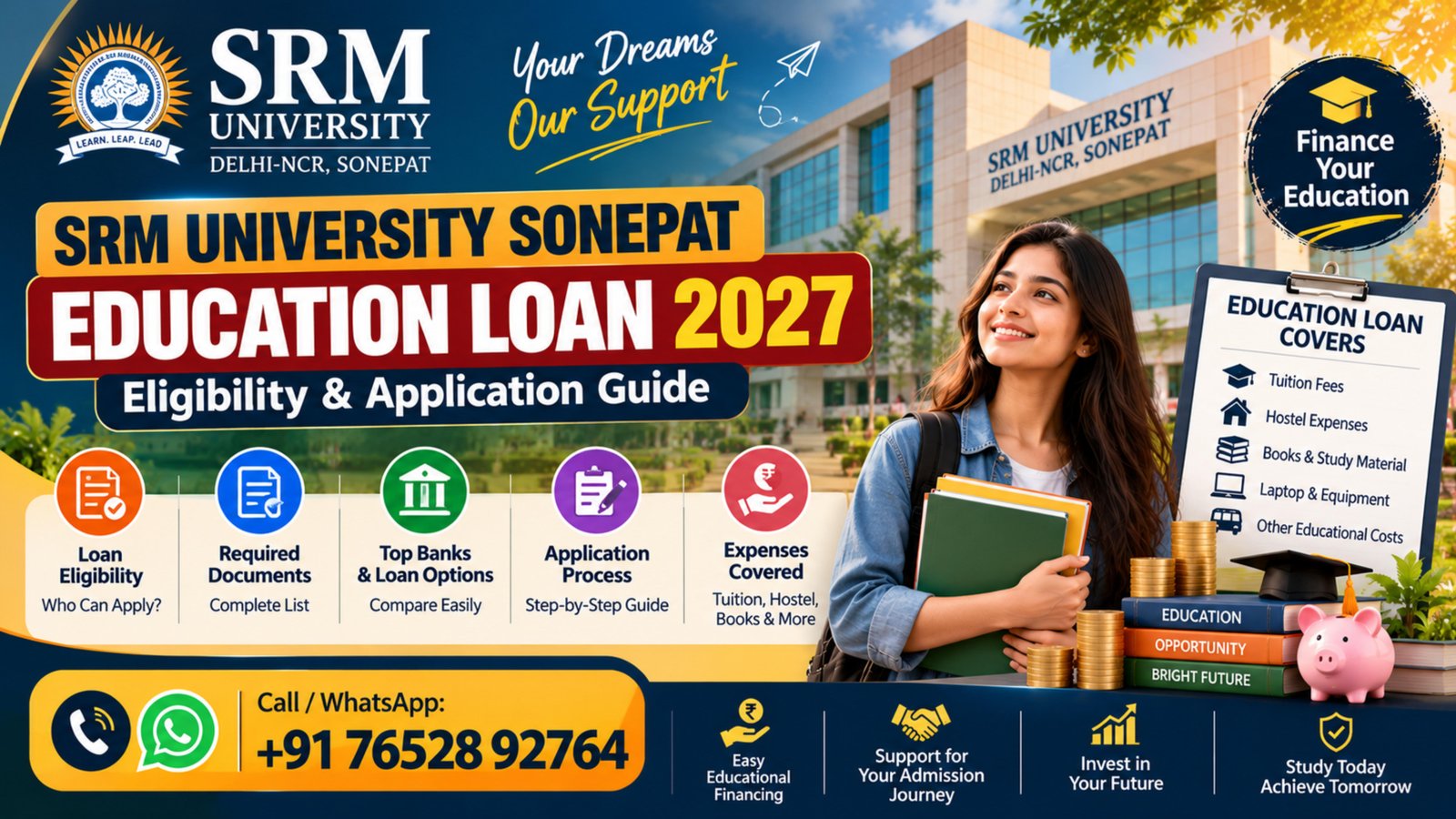
Introduction
Planning to pursue higher education in 2027? Managing tuition fees, hostel expenses, and other educational costs is an important consideration for students and parents. An education loan can help eligible students finance their studies while spreading the cost of education over a longer repayment period.
SRM University Sonepat Education Loan 2027 is a useful topic for students planning admission to SRM University Delhi-NCR, Sonepat, Haryana. Students interested in B.Tech, MBA, computer applications, management, and other programmes should understand how education loans work, which banks and financial institutions offer them, what documents are required, and how to apply.
Education loan approval depends on the lender's eligibility requirements, the student's academic profile, the selected course, the cost of education, and any applicable co-applicant or collateral conditions. Admission to a university does not automatically guarantee loan approval.
In this guide, we explain education loan eligibility, application steps, required documents, interest and repayment considerations, and practical tips for planning your education budget.
What Is an Education Loan for SRM University Sonepat?
An education loan is a financial product offered by banks and other eligible lenders to help students pay for approved educational expenses. Depending on the lender's policy, the loan may cover tuition fees, examination charges, books, equipment, hostel accommodation, and other eligible expenses.
Students planning to study at SRM University Sonepat can explore education loan options through banks, financial institutions, and applicable government-supported schemes.
The amount approved, interest rate, repayment period, security requirements, and eligible expenses vary by lender and loan product.
Before applying, students should obtain the university's official fee structure and admission documentation. These records can help the lender assess the estimated cost of education.
SRM University Sonepat Education Loan 2027: Eligibility Criteria
Education loan eligibility varies by bank and financial institution. Applicants should check the lender's current requirements before submitting an application.
Common eligibility considerations include:
- Admission confirmation: The student may need an admission offer or proof of admission to an eligible institution and course.
- Academic qualifications: Previous academic performance and the student's educational background may be considered.
- Course eligibility: The lender must accept the selected programme under its education loan policy.
- Indian citizenship or residency: Eligibility depends on the lender's rules and the applicable loan scheme.
- Co-applicant requirements: A parent or guardian may need to act as a co-borrower.
- Financial assessment: The lender may evaluate the co-applicant's income, existing obligations, and credit history.
- Collateral or security: Requirements depend on the loan amount, lender, and applicable scheme.
Meeting these general conditions does not guarantee loan approval. Each lender applies its own eligibility and underwriting criteria.
Which Banks Offer Education Loans?
Students can compare education loan products from public-sector banks, private banks, and other eligible financial institutions.
Examples of lenders students may investigate include:
- State Bank of India (SBI)
- Punjab National Bank (PNB)
- Bank of Baroda
- Canara Bank
- HDFC Bank
- ICICI Bank
Availability, eligibility, interest rates, collateral requirements, and institution-specific conditions differ by lender. Students should contact the lender directly to confirm whether their intended course and university qualify under the selected loan product.
Applicants may also investigate government-supported education loan schemes where eligible. The scheme's current rules, participating lenders, income criteria, and application procedure should be checked through official government or bank sources.
Documents Required for an Education Loan
Banks generally require documents to verify the student's identity, admission, educational background, and estimated expenses. The exact checklist depends on the lender and loan product.
Commonly requested documents may include:
- Student identity and address proof.
- Parent or co-applicant identity and address proof.
- Class 10 and Class 12 marksheets.
- Graduation marksheets for postgraduate applicants.
- Admission offer letter or admission confirmation.
- Official university fee structure.
- Entrance examination results, if applicable.
- Recent photographs.
- Co-applicant income documents.
- Bank statements or other financial records requested by the lender.
- Collateral documents, if required.
Applicants should obtain the bank's official checklist before submitting their application. Avoid sharing sensitive financial documents with unverified individuals or websites.
How to Apply for an SRM University Sonepat Education Loan 2027
Students can follow these general steps to explore education financing.
Step 1: Choose your course. Identify your intended programme and review the admission requirements.
Step 2: Obtain the official fee structure. Calculate tuition fees and other expected educational expenses.
Step 3: Compare lenders. Review interest rates, processing fees, repayment terms, collateral conditions, and any applicable concessions.
Step 4: Check eligibility. Confirm that the selected course and institution qualify under the lender's policy.
Step 5: Prepare documents. Collect academic records, admission documents, identity proof, and the financial documents required by the bank.
Step 6: Submit the application. Apply through the lender's official website or branch.
Step 7: Complete verification. Respond to requests for additional information and follow the lender's assessment process.
Step 8: Review the sanction letter. Before accepting the loan, check the approved amount, interest rate, repayment conditions, fees, and disbursement process.
Step 9: Confirm fee payment arrangements. Coordinate with the lender and university regarding the timing and method of fee disbursement.
Loan approval and disbursement are subject to the lender's final decision and applicable terms.
Education Loan Interest Rates and Repayment
Education loan interest rates depend on the lender, loan product, loan amount, applicant profile, and applicable concessions. Rates and terms may change, so students should obtain current quotations rather than relying on outdated online figures.
Before selecting a loan, compare:
- Interest rate and whether it is fixed or floating.
- Processing fees and other charges.
- Moratorium period, if available.
- Repayment tenure.
- Whether interest accrues during the study period.
- Repayment obligations during any moratorium.
- Prepayment and foreclosure conditions.
- Collateral or guarantor requirements.
A moratorium may defer scheduled repayment of principal for a specified period, but it does not necessarily mean interest stops accruing. The lender's agreement determines how interest is handled.
Students and co-applicants should estimate the future repayment amount and choose a loan they can reasonably manage after graduation.
Can Scholarships Reduce the Education Loan Amount?
Yes. If a student receives an approved scholarship or tuition-fee concession, the amount needed to finance education may be reduced.
Before finalising the loan, students should confirm:
- Whether the scholarship has been officially approved.
- Which fee components the scholarship covers.
- Whether the award applies for one year or the full programme.
- Whether renewal conditions apply.
- Whether the bank requires the scholarship to be reflected in the fee estimate.
For example, if an approved scholarship reduces tuition fees, the student may need to borrow less than the amount initially estimated. The exact loan requirement depends on the final payable fees and other eligible expenses.
Do not assume that a scholarship will be awarded or renewed unless the university confirms the applicable terms.
Tips for Choosing the Right Education Loan
Students should compare more than the advertised interest rate before choosing a loan.
- Request quotations from multiple lenders.
- Compare the total borrowing cost, including processing fees.
- Check whether the lender accepts the chosen university and course.
- Understand co-applicant and collateral requirements.
- Read the sanction letter and loan agreement carefully.
- Confirm how interest is treated during the study period.
- Estimate the likely repayment obligation after graduation.
- Keep copies of all application documents and lender communications.
- Use only official bank websites and verified branches.
- Never assume that admission assistance guarantees loan approval.
A careful comparison can help families make a more informed financing decision.
SRM University Sonepat Admission Assistance
Students who need information about courses, admission procedures, or fee details can visit the SRM University Delhi-NCR, Sonepat .
For admission enquiries, call or WhatsApp: +91 76528 92764
Students can enquire about course selection, admission requirements, fee information, and the documents they may need to prepare.
Please note that this is the admission enquiry number supplied for this article. It should not be represented as an official university helpline unless independently verified. Education loan approval remains the responsibility of the bank or lender.
Frequently Asked Questions
1. Can I apply for an education loan to study at SRM University Sonepat?
You can explore education loans from banks and eligible financial institutions. Approval depends on the lender's policy, the selected programme, admission documentation, financial assessment, and other applicable conditions.
2. What documents are required for an education loan?
Common requirements include identity proof, academic marksheets, an admission letter, the university fee structure, and financial documents for the student or co-applicant. The lender may request additional documents.
3. Can a student apply without a co-applicant?
Co-applicant requirements depend on the lender, loan amount, and applicable scheme. Many education loans require a parent or guardian as a co-borrower. Confirm the exact terms with the selected lender.
4. Does an education loan cover hostel fees?
Some lenders allow eligible accommodation and other educational expenses to be included in the loan. Coverage depends on the loan product and the documents submitted.
5. Can I get an education loan without collateral?
Some loan products may offer financing without collateral within specified limits and subject to eligibility. Requirements vary by lender, amount, and applicable scheme. Ask the bank for its current conditions.
6. Does a scholarship affect my education loan?
An approved scholarship may reduce the amount you need to borrow. Confirm how the scholarship is applied to your payable fees and whether the lender needs updated documentation.
7. When should I apply for an education loan?
Start comparing lenders when you begin the admission process. Submit the application once you have the required information and documents, allowing enough time for verification and disbursement.
8. How can I get admission guidance for SRM University Sonepat?
Visit the SRM University information page or call/WhatsApp +91 76528 92764 for admission-related enquiries.
Conclusion
The SRM University Sonepat Education Loan 2027 is an important consideration for students and parents planning to finance higher education. By comparing lenders, checking eligibility requirements, preparing documents, and reviewing repayment terms, applicants can make more informed decisions about their education budget.
Students should obtain the official university fee structure, confirm admission requirements, and calculate the amount they actually need to borrow. If a scholarship is approved, it may reduce the tuition expense and the required loan amount.
For course and admission information, visit the SRM University Delhi-NCR, Sonepat.
Call/WhatsApp: +91 76528 92764 for admission-related enquiries.
Always confirm loan terms directly with the bank and university details through authorised sources before making a financial commitment.